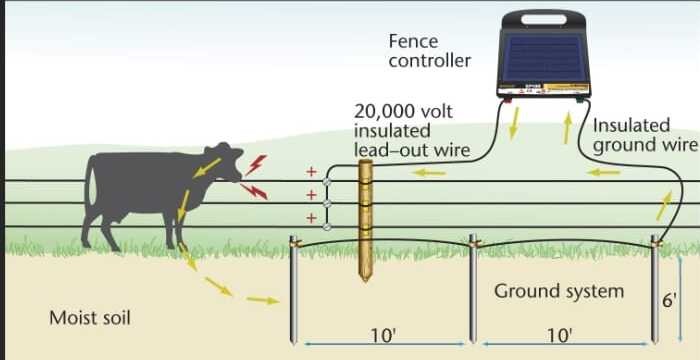
Steps to build a safe, strong system
An electric fence works by sending a short, high-voltage pulse through the wire on a very brief duty cycle — enough to deliver a strong deterrent shock without being lethal. Building one properly starts with the earth ground, not the wire: the pulse only completes its circuit, and delivers a proper shock, if the system has a solid, low-resistance ground connection back to the energiser.A weak or corroded ground rod is the single most common reason an “installed” electric fence doesn’t actually deter anything — the wire is live, but the shock is too weak to notice.
Wire types compared
● High-tensile wire — holds tension over long spans and resists sagging over years; the standard choice for permanent perimeter runs.
● Tension wire — easier to handle and work with on shorter runs, though it needs more frequent tightening than high-tensile.
● Polytape — a woven tape with fine wire strands running through it, used where the fence line needs to be clearly visible as well as electrified.